

The Rise of Secondary Markets: Why Global Investors Are Looking Beyond Tier-One Cities
As prime yields compress in traditional gateway cities, sophisticated investors are turning to emerging secondary markets for superior risk-adjusted returns.
Priya Nair
Contributor
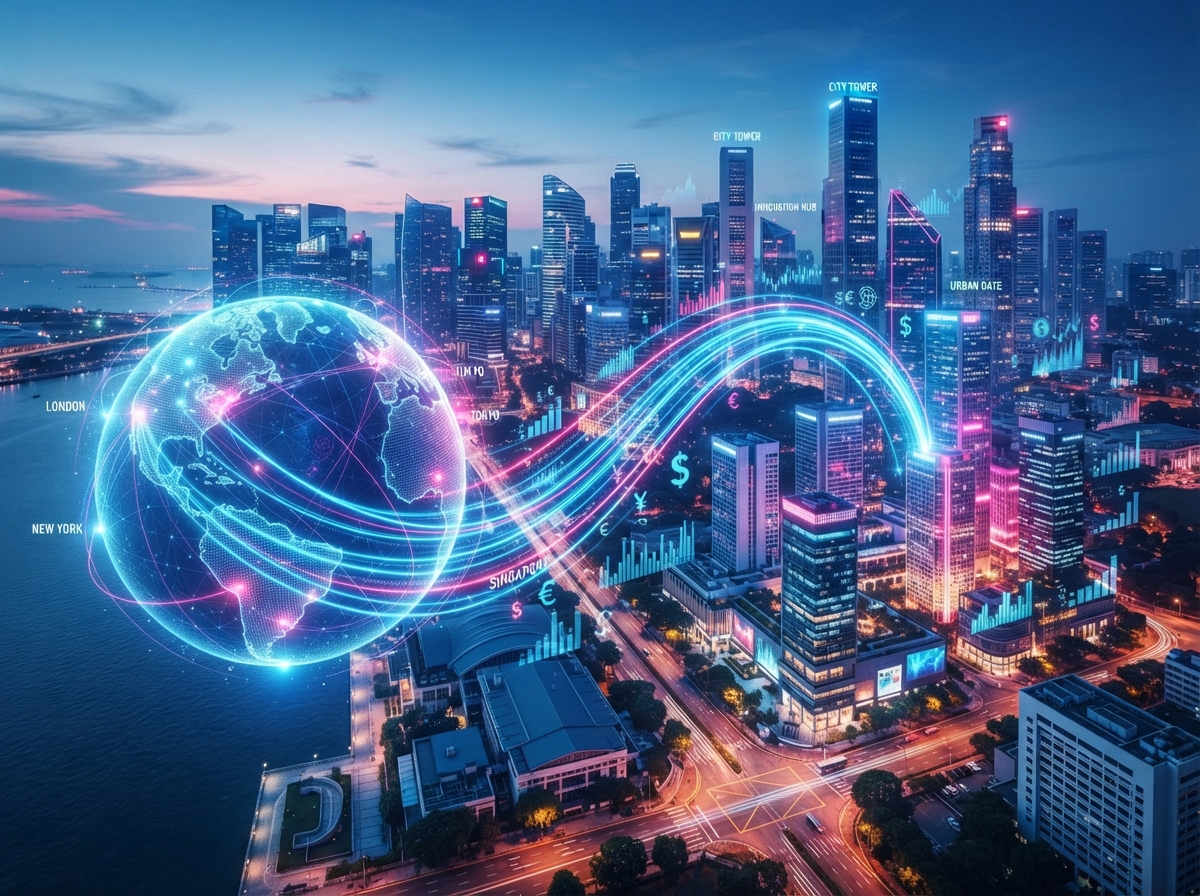
For decades, institutional real estate investment followed a predictable pattern: allocate capital to London, New York, Tokyo, Hong Kong, and a handful of other tier-one global cities. This concentration strategy delivered consistent returns as these cities benefited from globalization, financialization, and the concentration of talent and capital. But the investment landscape is shifting, and the smart money is increasingly looking elsewhere.
The Yield Compression Problem
The very success of tier-one cities has created a challenge for new investors. Decades of capital inflows have driven yields on prime real estate in these markets to historically low levels. Cap rates of 2-3% are common in central London, Manhattan, and Hong Kong, offering limited upside potential and significant exposure to interest rate movements. When central banks raise rates, the spread between property yields and risk-free rates can compress to near zero or even turn negative, undermining the fundamental investment case.
In contrast, secondary and tertiary markets often offer cap rates of 6-8% or higher, providing a meaningful spread over government bonds and creating genuine income returns. These markets have not yet been fully discovered by institutional capital, meaning assets can often be acquired at discounts to replacement cost—a rarity in gateway cities where land values have been bid up to extraordinary levels.
Dubai's Secondary Market Evolution
Dubai offers a fascinating case study in secondary market dynamics. While the prime districts—Downtown, Dubai Marina, and the Palm Jumeirah—continue to attract global attention, emerging areas like Dubai South, Jumeirah Village Circle, and Dubai Land are increasingly on the radar of value-oriented investors. These areas offer significantly more square footage per dirham invested, with the added benefit of being adjacent to the infrastructure buildout associated with the 2040 Urban Master Plan.
The appeal is not merely about price. Many of these emerging areas offer newer building stock, more generous floor plans, and proximity to expanding transport networks. For investors willing to accept a longer lease-up period in exchange for higher yields and greater capital appreciation potential, the trade-off is increasingly attractive.
Global Secondary Markets Worth Watching
Beyond Dubai, several global secondary markets merit attention. Lisbon has emerged as a European tech hub, attracting talent and capital priced out of London and Berlin. Mexico City offers demographic tailwinds and manufacturing growth that support long-term real estate demand. In Southeast Asia, Ho Chi Minh City and Bangkok are benefiting from supply chain diversification away from China, driving industrial and logistics real estate demand.
The common thread across these markets is a combination of demographic growth, economic diversification, infrastructure investment, and regulatory frameworks that are becoming more investor-friendly over time. The risk, of course, is that these markets can be less liquid and more volatile than established gateways. Investors must be prepared for longer hold periods and should factor in currency risk, political risk, and the potential for regulatory shifts.
Building a Diversified Portfolio
The most sophisticated investors are not abandoning tier-one cities entirely but are reducing their concentration and adding secondary market exposure to improve portfolio-level risk-adjusted returns. A portfolio that combines the stability and liquidity of gateway cities with the higher yields and growth potential of secondary markets can achieve a more favorable efficient frontier. Tokenization makes this diversification more accessible than ever, allowing investors to allocate smaller amounts across a broader range of markets.
Related Articles
Dubai 2040 Urban Master Plan: A Blueprint for the World's Most Liveable City
Feb 14, 2026

Tokenized Real Estate vs. REITs: Understanding the Key Differences for Modern Investors
May 08, 2026

Regulatory Frameworks for Tokenized Assets: A Global Comparison
Apr 25, 2026

DePIN Explained: How Decentralized Physical Infrastructure Is Reshaping Real-World Assets
Apr 09, 2026
More to Read
// CONTINUE EXPLORING
Tokenized Real Estate vs. REITs: Understanding the Key Differences for Modern Investors
May 08, 2026
Regulatory Frameworks for Tokenized Assets: A Global Comparison
Apr 25, 2026
DePIN Explained: How Decentralized Physical Infrastructure Is Reshaping Real-World Assets
Apr 09, 2026

From Gold to Digital Gold: Why Real Estate Tokens Are the New Store of Value
Mar 22, 2026